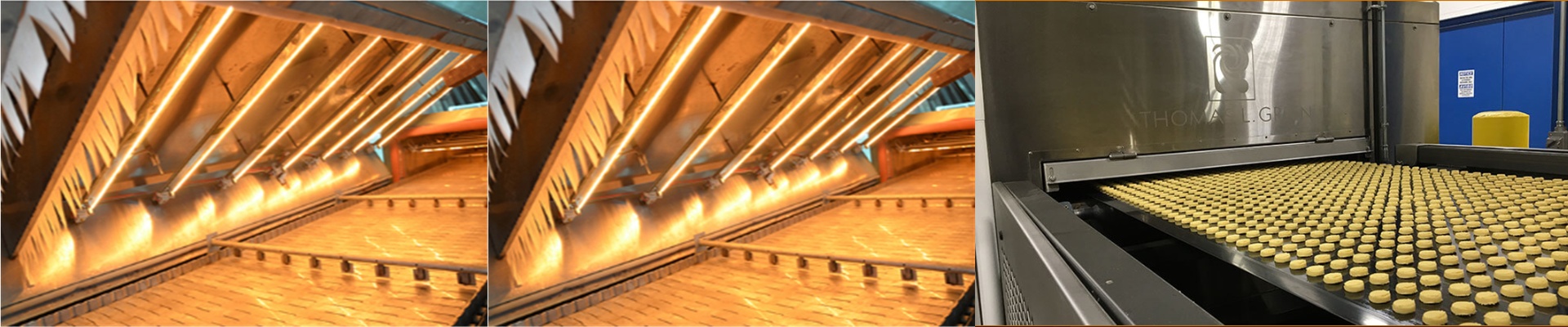
Speeding Up Your Bakery Line with IR Heating
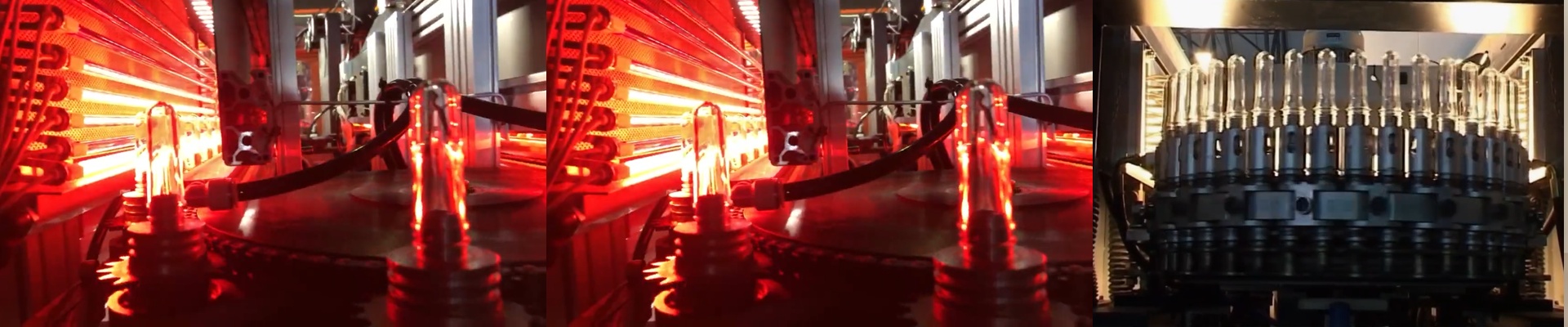
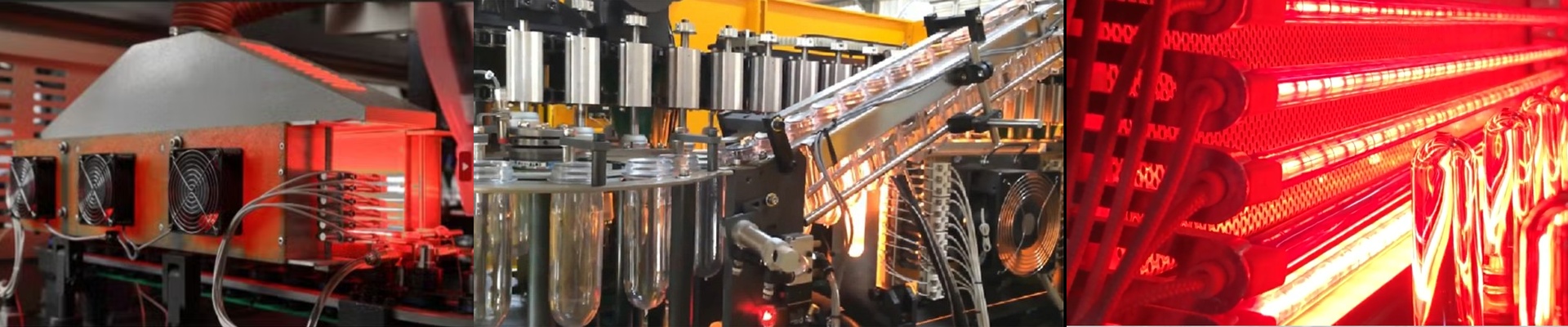
If you’re running a high-volume bakery, you know exactly where the headache is: the heating or holding zone. It’s almost always the bottleneck. When you try to push more product through the conveyor, standard convection heating just can’t keep up. Why? Because it relies on moving air, and air is slow. We do things differently. We use short-wave infrared (IR) lamps that beam energy straight into the food. No waiting for the air to warm up. You just hit the product directly, which means you can keep those core temperatures where they need to be in a fraction of the time. Getting the heat right If you want to crank up the production speed, you need more power packed into every millimeter of that line. We spec our tubes with high voltage to really drive that heat flux. The logic is simple: the more wattage density you have, the faster the food hits its target temp. That means you can speed up the belt without worrying about your product coming out cold. But a heads-up: when you cram that much power into a small space, your oven housing is going to feel it. Make sure your cooling fans and vents are up to the task. If they aren’t, you’re risking your control boards frying, and nobody wants that mid-shift disaster. Why quartz matters We build these heaters with high-purity quartz glass. It’s tough. It handles the shock of rapid heating and cooling way better than other materials. The best part? There is no twenty-minute “warm-up” period. They’re at full blast almost the second you flip the switch. Because they react so fast, we can tie the heater output directly to your belt speed using a PID controller. If the line slows down for some reason, the IR output drops instantly. No scorched edges, no wasted product. Keeping things running We don’t believe in making maintenance a nightmare. We use standard industrial connectors, so these are basically drop-in replacements. If a tube burns out, your team can swap it in a few minutes. No need to rewire the whole rack or stop production for an hour. It keeps the shift changes smooth and the downtime low. One last tip: these things get incredibly hot. Do yourself a favor and use high-temp silicone or fiberglass braiding for your wiring. It’s a small detail, but it beats having your insulation melt into a puddle.