
Keeping Your Bakery Ovens from Giving Up the Ghost
Let’s be honest: steam ovens are a nightmare for heating elements. You’ve got high humidity and wild temperature swings happening all at once. It’s a brutal cycle that usually ends with your elements burning out way too early or your heat getting all patchy. That’s why we stick with black ceramic radiant heaters. Standard quartz tubes just aren’t built for this. They can’t handle the constant condensation and the corrosive mess of a busy commercial bakery. Ceramic, on the other hand, actually likes the fight.
Why the black ceramic actually works
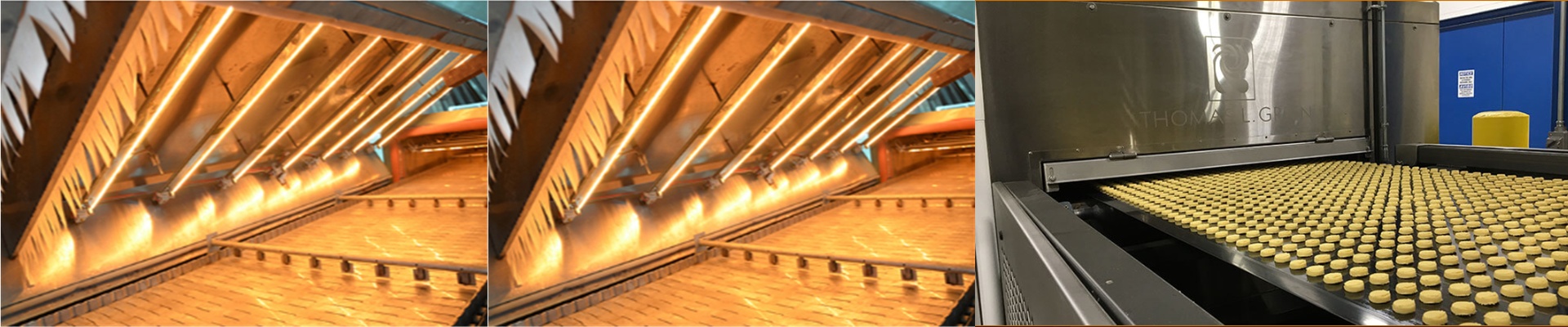
Here is the thing about the coating: it changes how the heat hits your bread. If you use clear lamps, you often get “hot spots”—those annoying burnt patches on your dough. Black ceramic spreads the infrared heat out more evenly. Your crust browns perfectly across the whole loaf without scorching the top. Plus, ceramic has some real weight to it. It doesn’t just flash-heat and disappear; it holds onto that warmth. So, when you slide in a cold tray of product, your oven temperature doesn’t just crash. It stays steady.
Dealing with the steam
In a steam oven, you’ve got water droplets constantly slamming into the heater. If your lamp isn’t up to the task, that thermal shock will crack the glass or kill the filament. Our ceramic heaters are built to take a beating. The coating acts like a shield, keeping the internal element from oxidizing. This means your wattage stays stable, even after thousands of cycles. It just keeps humming along.
Getting them installed (and the trade-off)
These are pretty much drop-in replacements for most industrial racks. You wire them into your current controllers, and you’re good to go. But, there is one thing you should know. Ceramic heaters don’t ramp up as fast as shortwave halogen lamps. You aren’t getting instant heat here. It’s a trade-off. You give up that initial burst of speed, and in exchange, you get a bake that’s consistent every single time and hardware that actually lasts. Just double-check that your wiring is rated for the wattage so you don’t run into any voltage drops.