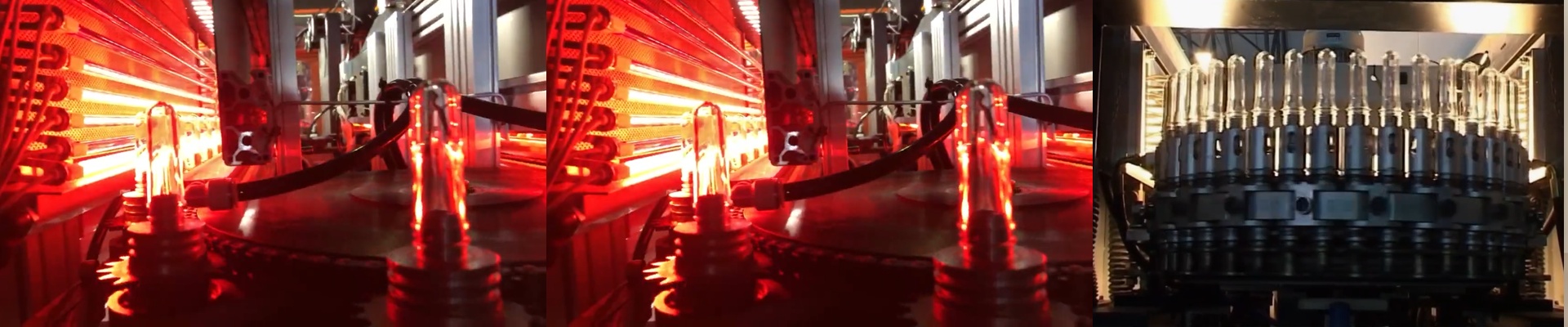
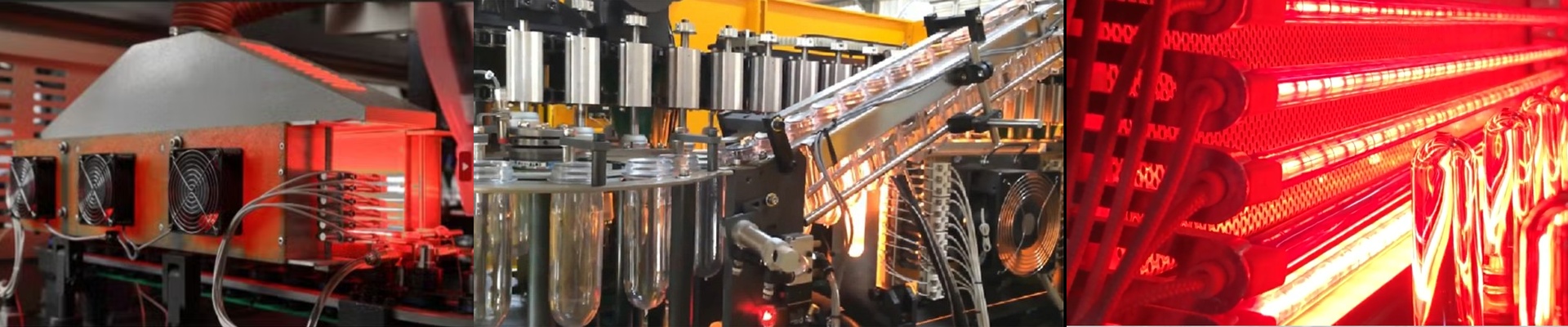
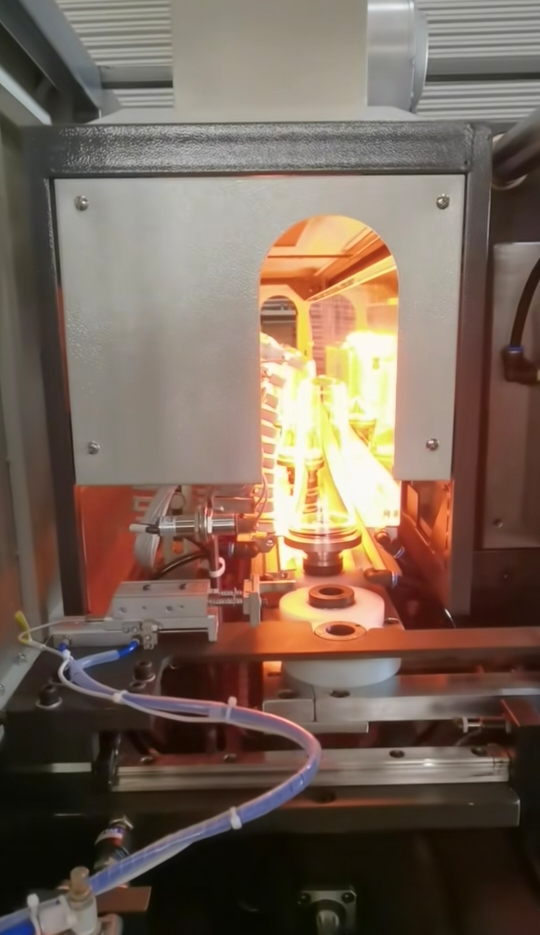
On the plant floor, an inconsistent heating tunnel doesn’t just slow the line—it creates scrap and forces rework. On a SIPA SFL 4/4 linear blower, preform temperature has to land in a tight window every cycle. If the IR radiator drifts off-spec, you get uneven stretch, blown bottles, and unplanned stoppages.
What matters, technically
We built the SIPA SFL 4/4 linear blower IR radiator to match the OEM dimensions and electrical behavior. The emitter uses a quartz halogen design, with output that aligns with the original SIPA SFL 4/4 heating section. It’s engineered to the same 1:1 lamp length, wattage density, and thermal profile. The R7s base and connector interface drop straight into the existing holder—no rewiring. Filament geometry and reflector placement keep the heating pattern consistent across the preform shoulder and body, so you keep repeatable temperature distribution without re-tuning the whole heating zone.
Why this matters on a linear blow molder
On a linear blow molder, heating sets the pace. Matching the SIPA SFL 4/4 IR parameter set means you can keep the same cycle time without overshooting or underheating. You get stable preform heating, fewer rejects from off-axis temperature, and less downtime swapping lamps. Energy stays close to baseline because the emitter delivers the expected power density without extra current draw. And with stable output, you don’t have to chase setpoints every time you replace a lamp.
What you need to know
Installation is straightforward, but the lamp is sensitive. Keep the quartz tube clean, and don’t touch it with bare fingers—oils create hot spots and shorten life. Double-check your machine’s voltage and ignition characteristics match the lamp rating, and make sure the holder contacts are in good shape. For best life, run the heating tunnel within the specified preform material and line speed range, and use a pyrometer to track output so you catch drift early.