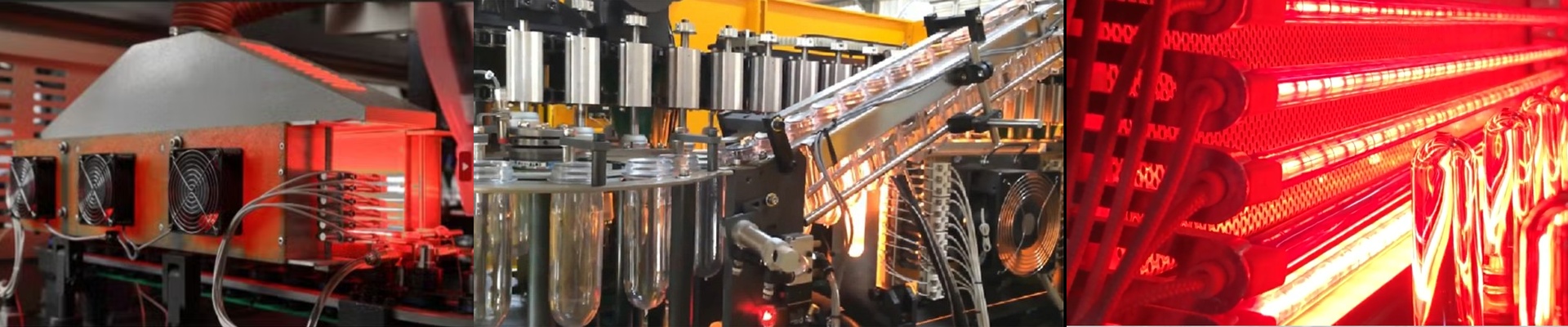
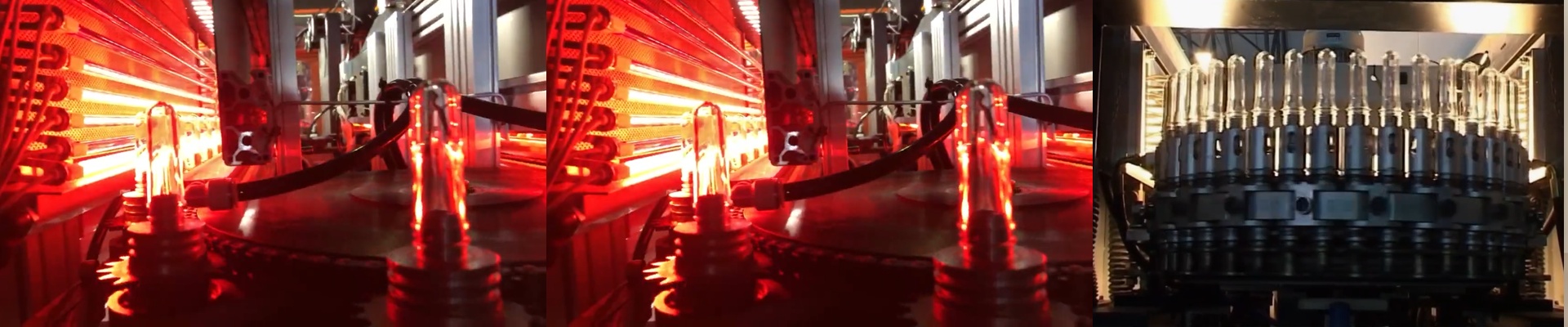
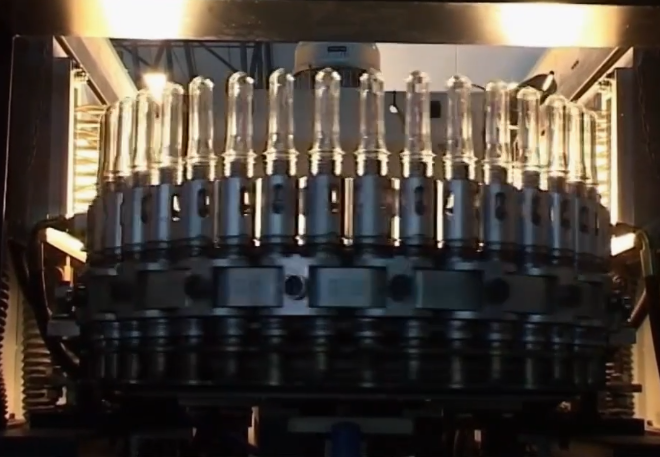
On the plant floor, a blown bottle reject is never just a reject. It’s scrap resin, it’s lost cycle time, and it’s a heating section that can’t hold the set curve. When your PETC preform softening falls short, the blow molder either slows down to compensate or ships parts that don’t meet spec. The fix starts where the heat starts—at the emitter.
What matters, technically
We build PETC preform softening emitters as engineered components, not generic heat sources. For rapid, repeatable preform heating, short-wave infrared halogen lamps deliver what blow molders need: fast warm-up, tight control, and predictable output. Key specs aren’t marketing—they’re the difference between stable heating and drift. We match watt density to preform wall thickness and cycle rate, so the lamp delivers the required energy without overshooting. Voltage and tolerance are chosen to fit the heating-tunnel power architecture, and physical dimensions—length, diameter, and arc length—are held to close tolerances. That way the lamp seats correctly in the reflector and aligns to the preform path. Termination is built around standard connector types like R7s, so the lamp installs clean and makes consistent electrical contact.
Why this works in stretch blow molding
In stretch blow molding, the heating profile is the bottleneck. If emitter output drops or turns uneven across the preform, you get one-sided stretching, crystallization issues, and inconsistent wall thickness. Our emitters are specified to match the OEM heating-tunnel geometry and control expectations, so temperature distribution across the preform stays repeatable shift after shift. That translates into fewer rejects, more stable machine speed, and less downtime chasing heating drift. Energy use improves because the lamp hits setpoint quickly and holds it without constant over-correction.
The details that bite you on install
Installation is straightforward, but real-world details matter. Confirm the lamp wattage and voltage match the existing power supply and control strategy—mismatched voltage can drive unstable PID behavior. Clean the reflector and lamp socket before replacement. A little oxidation or dust can measurably change heating uniformity. And plan for thermal shock: let the heating section cool before swapping emitters, then run a controlled warm-up ramp after startup to protect the quartz envelope.